Chapter iv
iv.Cutting and saving turf
The cut is a few weeks in spring. Saving the turf is the rest of the summer.
The tool is the sleán. Ó Dónaill gives the word as “turf-spade, slane”, and records sleán uchta, the breast-slane.16 On the bank it is a narrow blade with a wing at right angles along one side, on a long shaft. One stroke cuts two faces of a long, oblong sod. It is not a garden spade, and the sod is not a neat cube: it is a rough brick, several times longer than it is wide, fibrous, with crumbly ends.
Cutting was spring work. One person cut. Another caught the sod as it came off the face and threw it out, or a barrow took the wet sods off to be spread. A sod is a fód; a sod of turf is fód móna. A small broken piece is a caorán.16
Saving is the drying, and it is slow because the peat starts so wet. Undisturbed peat is 88% to 97% water.2 The sods are left until the outside skins over. Then they are footed: stood on end in small leaning clusters so the wind can pass through. The Irish is gróigeadh, which Ó Dónaill glosses both as the footing of turf and as footed turf.16
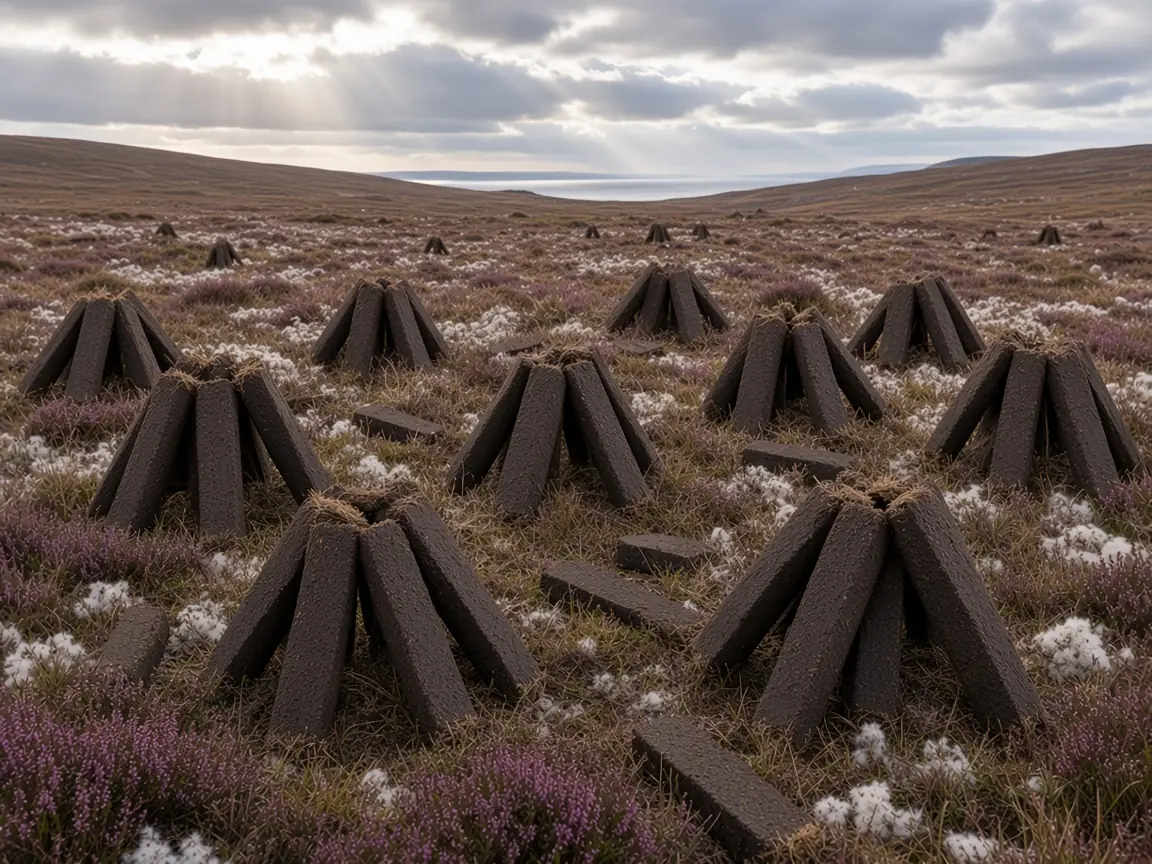
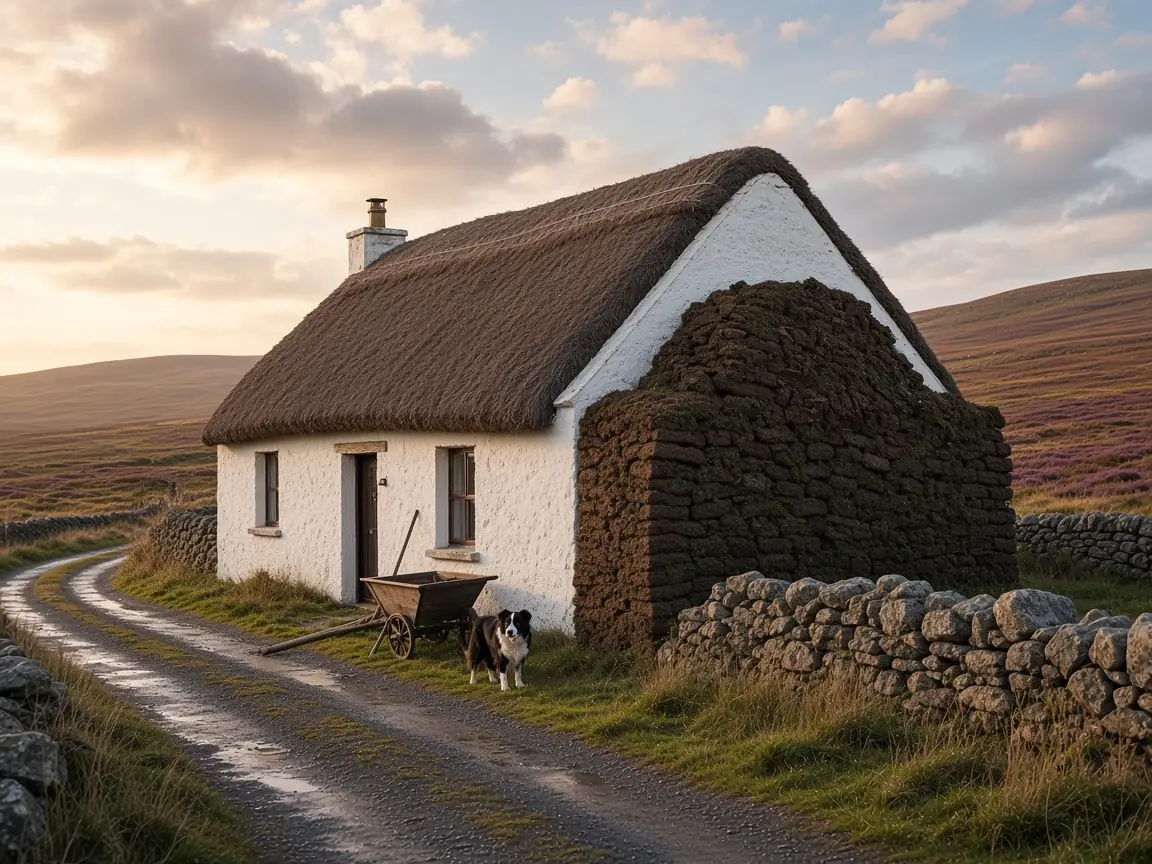
Later in the summer the footings are re-footed, or built into larger heaps, the clamps. When the sods are light enough they are drawn home by cart, creel or tractor. The creel is a cliabh.16 At the house they are built into a reek, a cruach mhóna: Ó Dónaill’s “stack, clamp, of turf”, often set against the gable where the wall takes the weather.16
How long the whole job takes is usually the summer: cut in spring, home in late summer or autumn, and longer if the year stays wet. That is the ordinary run of memory in the Schools’ Collection on Dúchas, rather than a stopwatch figure from one bog.17
A group of neighbours at the bank is a meitheal, and Ó Dónaill’s phrase for a band of turf-cutters is meitheal mhóna.16 This guide does not try to write the social history of that work.